Hi, I hope I didn’t miss something, but how do you go about assembling a separate wooden mouthpiece? Let’s say the vefoun mouthpieces for example? How do you do it? Any glue or technique you’d recommend? And what if the outer diameter doesn’t match our didge?
Thanks in advance
Yeah, often the mouthpiece is glued directly onto the didgeridoo. Vefoun and all the other makers do that.
That’s the whole job of the mouthpiece, adjusting the outer diameter of the mouthpiece to the didgeridoo. You have to shape the mouthpiece accordingly.
thanks for these answers, is there an eco-friendly glue you’d recommend? what’s the one you use if you’re happy with it? thanks in advance
There, I’m not sure… Some didgeridoo makers use simple wood glue which is pretty decent in terms of composition/eco-friendliness I think.
Hey @Karl !
Awesome! It’s great to have several didges to help you progress!
Do you know what kind of wood it is? It’s a true cylinder!
It’s normal if you’re struggling a bit at the start, an F is easier to play than a C  Keep it up!
As already mentioned, a mouthpiece should be 30mm. Do you have one that size?
You’ve come to the right place, I just made one this morning, my new didgeridoo is coming along nicely 
I took a photo that kind of sums up the steps
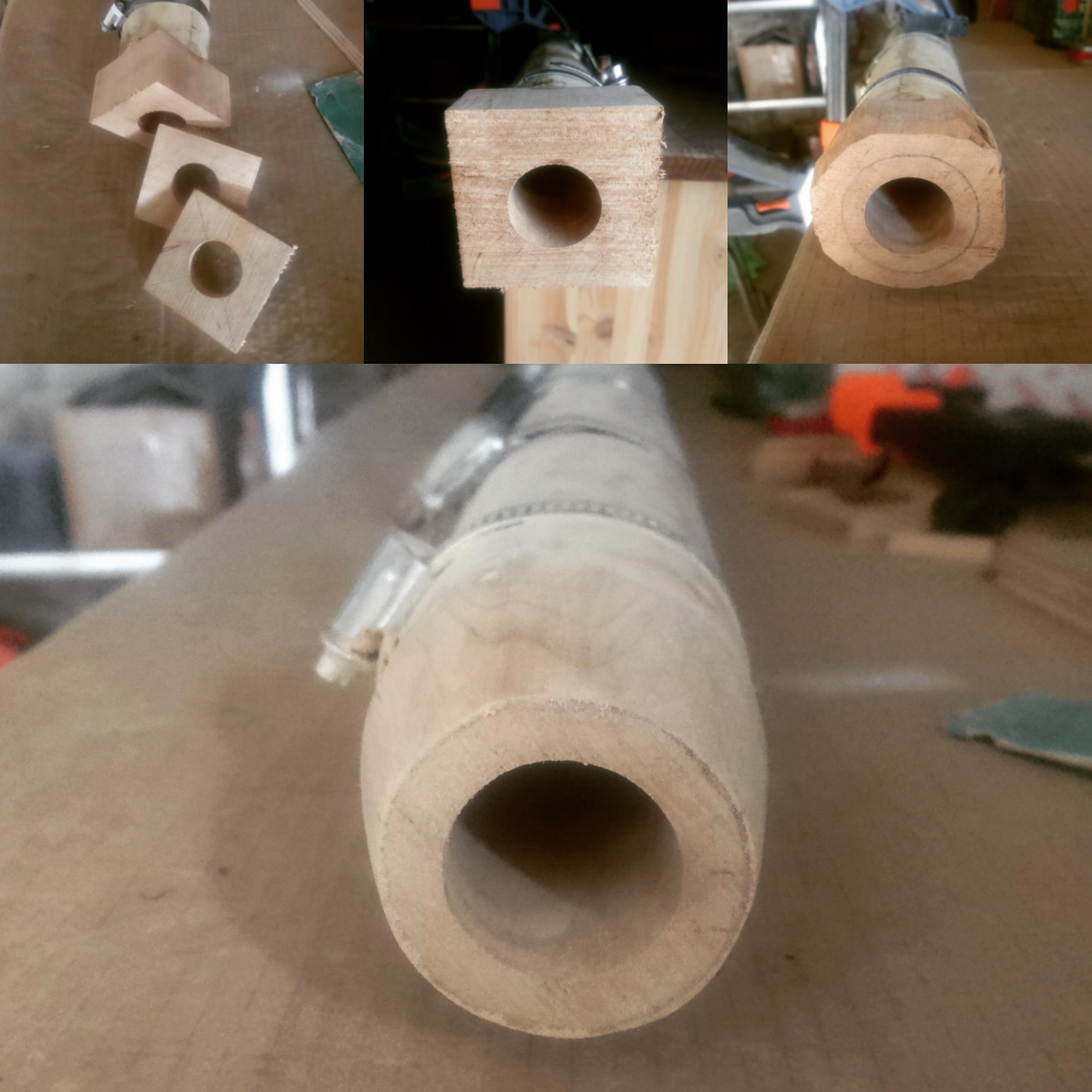
In the first one it’s already glued and I made several cuts after gluing to tune it, but the principle is there.
You cut a piece of wood, you drill it (I’d recommend using a drill press) with a 30mm bit and you glue it! (personally I place the didgeridoo upright, with a barbell inside it, that’s the right dimension
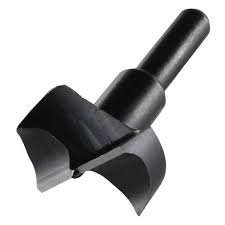
 ) that gives you photo 2
On the inside, you need to even out the mouthpiece with your didge, I use a sanding bit
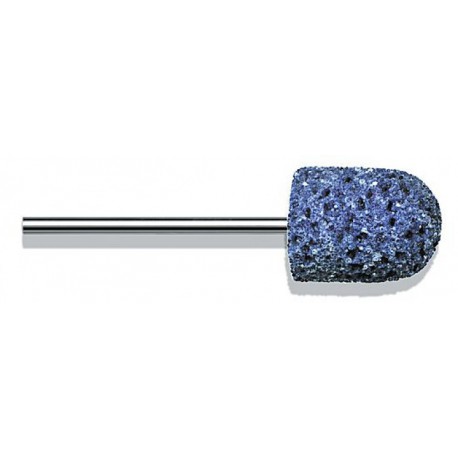
On the outside, you rough it down, you trace your circle, and you sand, you sand…
After that you can break the edges slightly so it’s not sharp!
2 Likes
Hey @Karl,
I’ve moved Seb’s answer to this dedicated mouthpiece thread.
@Sébastien explained really well about a glued wooden mouthpiece, that’s the luxury option for a mouthpiece and it’s perfect if you already know what diameter works for you.
Thanks Seb for the dumbbell trick — I was wondering how to get the mouthpiece to stick to the didge since you can’t use a clamp in that direction.
Karl, if you want something simpler but also reversible, you can aim for a beeswax mouthpiece. The principle is really well described in Gautier’s blog which is mentioned higher up and I’ll put it here again:
or even in pictures by Adam CrookedStixz himself (but in English)

Beeswax is easy to shape and lets you repeat the operation as many times as you want if you’re not happy with it. So it lets you test different diameters and find the one that works for you with this new didge.
After that, if you want something more permanent but still on the principle of a moulded mouthpiece, you can do the same thing in resin.
in that case I’d recommend « mulliput » resin:
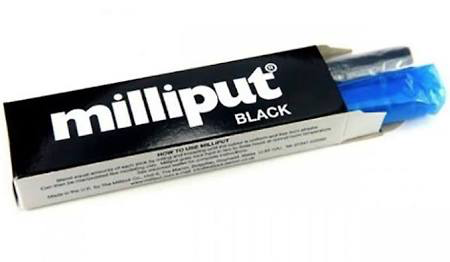
It’s a British brand, and I’ve obviously got no stake in it, but I haven’t found an equivalent product in French DIY shops. The products they offer like wood filler or epoxy resins dry too fast in 5 minutes and can’t be worked on.
This resin dries in 1 hour and can be smoothed with fingers dampened with water. You get a finished result straight after drying without needing to sand it.
It’s an English maker Joe Caudwell who recommended this product to me, I’m giving him a shout-out to thank him.
Here’s the result for my didge where I replaced my beeswax mouthpiece with this resin.

4 Likes
Thanks guys @Christophe_E, @Sébastien.
Those are some real tutorials you left me. That’s seriously awesome  .
.
Gotta find the time to watch all of that closely now.
A big thanks to you anyway  !!!
!!!
2 Likes
@Christophe_E, can you fill us in on what this resin is made of?
I’ve got some serious doubts about how safe it is!
And since we’re putting our lips directly on it…
Om
1 Like
Well, @Yv, the exact composition isn’t described by the maker, but it’s an epoxy resin — that is, the same type of product mostly used to glue slide didgeridoos and also often used to varnish them on the outside.
The subject is sensitive and I’m not a chemist, but epoxy resins are among the most inert resins AFTER polymerization. Wikipedia mentions the use of epoxy resin in food contact applications like the inner coating of beverage cans or wine tanks (is that proof of safety?)
To tell you there’s no risk, I’m not capable of that, but I think there’s no more risk than blowing into a varnished wooden mouthpiece. There should even be slightly less, because like all two-part resins, polymerization happens thanks to a catalyst, so the 2 initial products are « consumed » to form a new one.
Unlike most varnishes where hardening is obtained by evaporation — either of a solvent or water, as with « aquarethane ». This evaporation continues over time even after complete drying in the form of VOCs.
I’m talking here about risks after hardening, when we blow into our didge.
It’s quite different when handling resins during shaping or applying as varnish. There, you absolutely must protect yourself with gloves, avoid skin contact, wear a mask in the case of varnishes, and ventilate the room.
Depending on their sensitivity, everyone will choose the solution that suits them. Obviously, from that perspective, beeswax has no equivalent and remains 100% natural and harmless.
4 Likes
Thanks for your reply Christophe.
No, it’s not proof — quite the opposite, actually…
Yeah, and when it comes to polymerization, that’s where it all matters. If the poly happens perfectly (equal parts, ideal temperature, etc…), then « in theory » it would be safe.
In theory only, because how many times have we seen products supposedly harmless at the time become dangerous in the years that followed…
Classic…
But anyway, the reason for my question, like with BPA of course, is to find the healthiest materials and products possible for our health based on the information we have…
It’s never a good sign when a product doesn’t mention its composition. Not transparent at all, especially when in France we have labeling regulations that are way stricter than in other countries.
If anyone has suggestions for other natural products/varnishes to share with us, don’t hesitate to share your experiences and contacts on this topic.
Om
1 Like
@Yv I’m no specialist at all but I get what you’re asking about.
Why not oil the mouthpiece (and the rest) with a natural vegetable oil for wood?
« Oil molecules penetrate deep into the wood and saturate the wood’s pores by taking the place of air, so you get waterproofed wood that, however, continues to breathe very well »
You could always reapply it on and in the mouthpiece if needed.
Food-grade linseed oil (it has a smell when it goes rancid when you eat it, on wood I’m not sure) or " To oil a wooden cutting board, it’s better to use an oil that’s odorless and tasteless. Almond oil or grape seed oil is a good choice".
Of course I’m also thinking of olive oil, it has a pleasant smell and doesn’t go rancid.

1 Like
Yeah, oil of course.
For my part I’m looking for more of a « varnish » style product (or « bio » type resin) to make my homemade wooden mouthpieces smooth.
The wood I’m using (for now) isn’t hard, so I can work it with the tools I have, but it’s not really homogeneous either and its fibres aren’t tightly packed…
Which explains that…
1 Like
http://www.natureetharmonie.fr/ I bought my varnish from them and I’m really happy with it. No smell, resistant, French and natural!
1 Like
Or as Elisabeth says, there are natural saturators…
This saturator is formulated:
with raw materials of renewable origin,
without VOC (volatile organic compound);
without solvent of petrochemical origin (isoparaffin, heavy naphtha, light, hydrogenated, etc.),
without solvent of plant origin based on turpentine essence, based on citrus terpene, etc.),
without lead-based or zirconium-based desiccant, etc.
without chemical UV inhibitor.
Composition:
abrasine oil (Chinese wood oil),
cold-pressed linseed oil,
linseed oil ester,
water,
essential oils,
vegetable emulsifier,
anti-UV pigmentary principle.
2 Likes
Here’s the product sheet, a bit brief, but at least there’s some info…
High-resistance varnish, satin matte finish:
Colorless, solvent-free, VOC-free and formaldehyde-free, Nature & Harmonie’s High-Resistance Varnish with satin matte finish is a finishing product very rich in vegetable oil and water-repellent agent. Made from carefully selected raw materials, the Varnish with satin matte finish is characterized by exceptional performance.
Compliant with EN 71/3 toy safety standard and very low-emitting, the Varnish with satin matte finish achieved an A+ rating in the ISO 16000 test.
- Beautiful satin matte finish.
- Colorless and transparent.
- Compliant with toy standard.
- Solvent-free, VOC-free and formaldehyde-free.
- Very fast drying.
- Recoatable after 1 hour.
- Antistatic.
- Excellent levelling.
- Preserves the natural appearance of the substrate.
- Very high resistance to abrasion, stains and scratches.
The High-Resistance Satin Varnish can be tinted with our beautiful collection of earth, mineral and spinel pigments.
3 Likes
I really like your proposition @Ivan, it smells like healthy stuff.
1 Like
Question:
Why not bevel the mouthpiece on the inner side for better « grip »?
Mouthpieces are all beveled on the outside but very few on the inside…
Example with 2 photos of my woodslide (applies to others…)


At this level:

A bit like that one… And like William thoren’s multi drone idea


Heads up to the tinkerers for testing
@GERALD @Yv @Sébastien @soleiljaunecristal @Cédric
@Philippe_Bechu @Ivan @Christophe_E
2 Likes
Jaime, I tested this latest shape with raised edges on my beeswax mouthpiece and I find it quite comfortable. After that, it’s harder to achieve with a wooden mouthpiece, that’s where my limit is.
2 Likes
On a technical level, I think you’re confusing a chamfer/radius (a 45° angle or beveled edge created to deburr a 90° corner) with the projected area of a surface.
If the mouthpiece is like the slide, it generates a projected area in two dimensions that is a circular annulus with an outer radius and an inner radius.
If the mouthpiece is like multi-drone, its projected area is also a circular annulus but curved in the 3rd dimension. However, it also has chamfers or radii to avoid getting a bunch of splinters in your mouth.
Now if you’re human that’s a problem…if you’re a panda much less 
Also, the pressure on this surface isn’t applied with the same part of the mouth, it seems to me?
Wahhhhh I’m sorry @Ivan but I’m gonna be totally straight with you: I’m not getting any of it at all…
Yeah, I don’t have the terms and the technical knowledge…I’m realizing that trying to translate your message into my « language » …