Original title: « Who is Clinton Pryor »
Original text in English co-written by Clinton Pryor’s support collective; « Clinton’s walk for Justice ». Translated by Thierry Gerard. Source: clintonswalkforjustice.org
Who are you?
My name is Clinton Pryor.
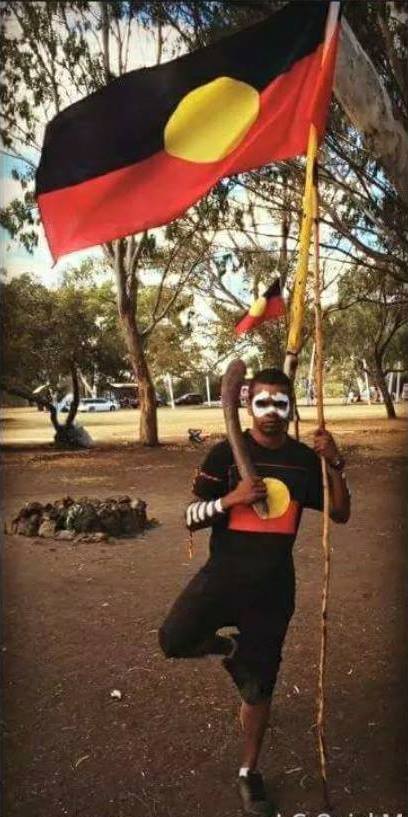
Where do you come from?
I am Wajuk, Balardung, Kija and Yulparitja, a man of the west.
Where were you born?
I was born at King Edward Hospital in Subiaco.
Where did you grow up?
When I was a child, from birth until I was 7 years old, I grew up in Carnavon, Halls Creek, Kununurra, Mulan Community before moving to Perth. After I turned 7, I grew up in Perth.
Where do you currently live?
Now, I live in Rivervale in the Belmont area.
What was the hardest part of your life?
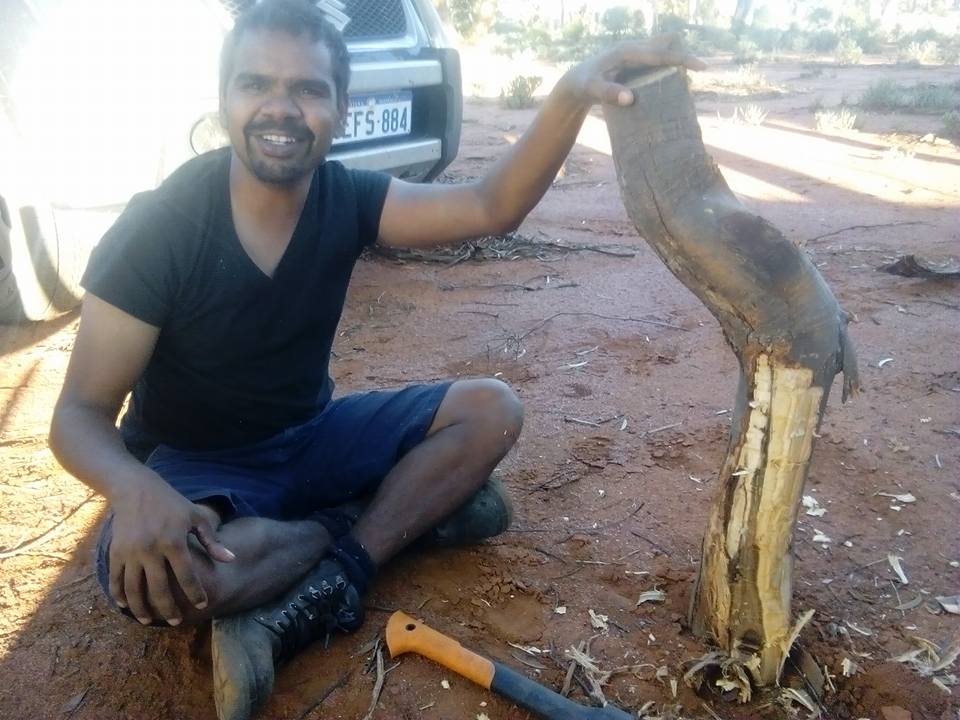
The hardest part of my life was when my father passed away when I was 16 years old. It was the day that changed my life forever. I remember when I was sitting next to his body at Armadale Hospital, I put my hand on his head and promised him three things: to help my people, take care of my family and keep alive the culture of the peoples I come from. After that, I lost my job, my girlfriend left me and I left home to live on the streets for two years before rebuilding myself and getting back on the right path because I knew that if I didn’t move and if I didn’t believe in myself, I would go nowhere in life.
What was the best part of your life?
The best part of my life was when I was in college, I played football and was captain of the footy team at Thornlie, I had a girlfriend, a job and I went surfing all the time at the beach.
What made you most proud?
When I was 7 years old, I wasn’t the model student at primary school. I was one of those kids who sat on the library reading books. I remember, it was during the graduation ceremony, the night before the event itself, the kids had to perform and sing on stage for the big day. That day the teacher told us kids who wanted to, to get up on stage in front of the group. That’s when my friend asked me to get up and do the dance I’d shown them that I was learning at home in front of a mirror. And so I got up to perform the moon walk in front of the whole class and everyone was screaming and saying yeah go Clinton! After that day, I became a well-behaved kid and the girls loved me after that day haha!
What would you like to become in the near future?
In the near future, I’d like to one day be a father and have my own little family and live the dream I’ve always dreamed of since I was a little boy and that’s what will bring about change in the world.
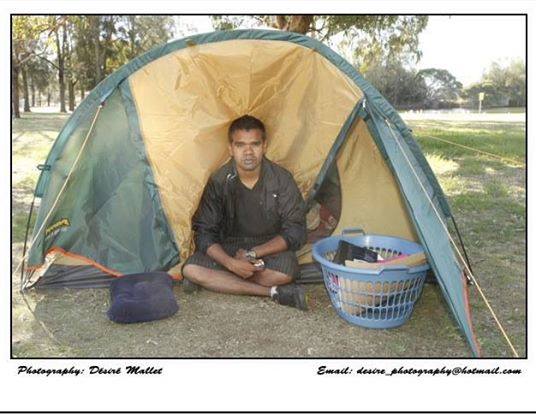
What was your experience living on the streets?
The hardest thing when I was homeless was not having money, no home and nobody to take care of me or ask how I was doing. It was like nobody cared about me and I felt alone.
What have been your experiences with remote Aboriginal communities?
Well, I know what life is like in these communities. I grew up in a community with my mother before she passed away. Life in community is very important, because it keeps my people away from the city or the suburbs, because in the city and suburbs, there is drugs, alcohol and violence. Life in community is under the control of the Elders who follow the traditional way with our own Law that we have lived by for 60,000 years and our Law keeps our people connected.
How do you stay strongly spiritually connected with your people?
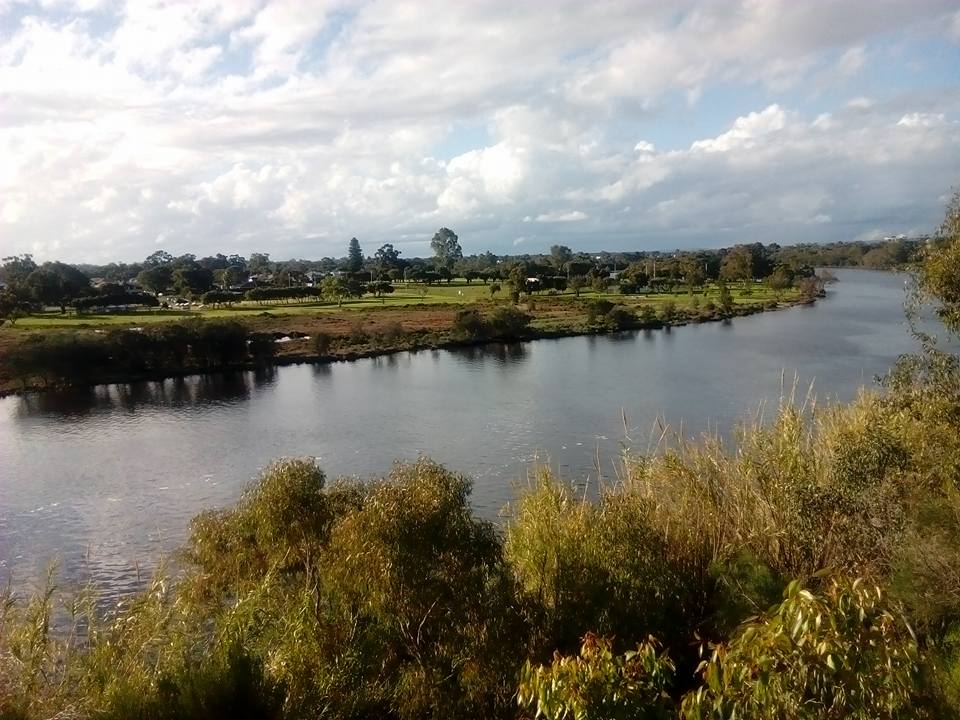
I am very connected with all forms of life around me. I connect in a way that allows me to feel the Great Spirit in the air. I can tell what is true and what is not. It makes sense in my heart when I can say that something is good or bad and I know it through the animals around me, if it’s going to be a nice day or not.
What can you tell us about your spirituality?
I see the earth and the animal, I see this world in a different way. It’s a bit like Star Wars and the Force. But I take my strength from the earth, it’s difficult, sometimes, to be able to explain it. The Earth (editor’s note: Mother Earth) gives me strength and I give her love and pay attention to her expectations of me, and I try to protect her from mining companies. In the beliefs of my people, we believe that when we die, we can come back and be part of a tree, an animal, a rock, a river, the air and the earth itself. That’s why I’m so connected to the earth because I know that those who passed before me are still with me and around me. That’s the Great Energy of life.
What concerns you most in this world?
What concerns me most is my family, my friends and my culture. I try not to let this world be destroyed by these billionaires hungry for money.
What good things have you been involved in recently?
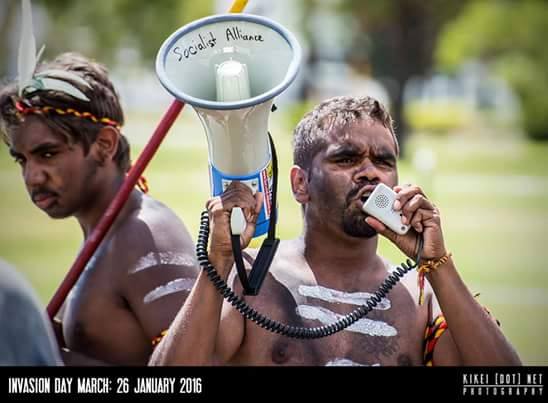
I went to protest against the forced closure of Remote Communities, for the homeless and I organized rallies.
What are the challenges you will face to accomplish these good things?
I am constantly monitored by police on Facebook, but I don’t give up on believing that one day we will win our fight for our rights as First Nations People on the land where we belong.
What are your fears about the end of funding for Remote Communities in Western Australia?
The most important consequences are seeing my people living on the streets and seeing the land being destroyed and the culture dying slowly.
What risks are there for sacred knowledge, rituals and customs if Remote Communities are closed?
If Remote Communities are closed, rock art and song lines ( editor’s note: songs linked to the Dreamtime and the physical world, called Dreaming or Tjukurpa, Ngarangani or Bugarigara… among Aboriginal peoples ), will be threatened and could be lost forever without the younger generation being able to know their culture, their people’s way of life, and how we live on this earth.
What will happen to people in Remote Communities if services are stopped?
I have seen many people from my nation living on the streets and around the city where they felt lost. (editor’s note: cities are often very far from their original community ).
What are the 3 main reasons that pushed you to do this walk?
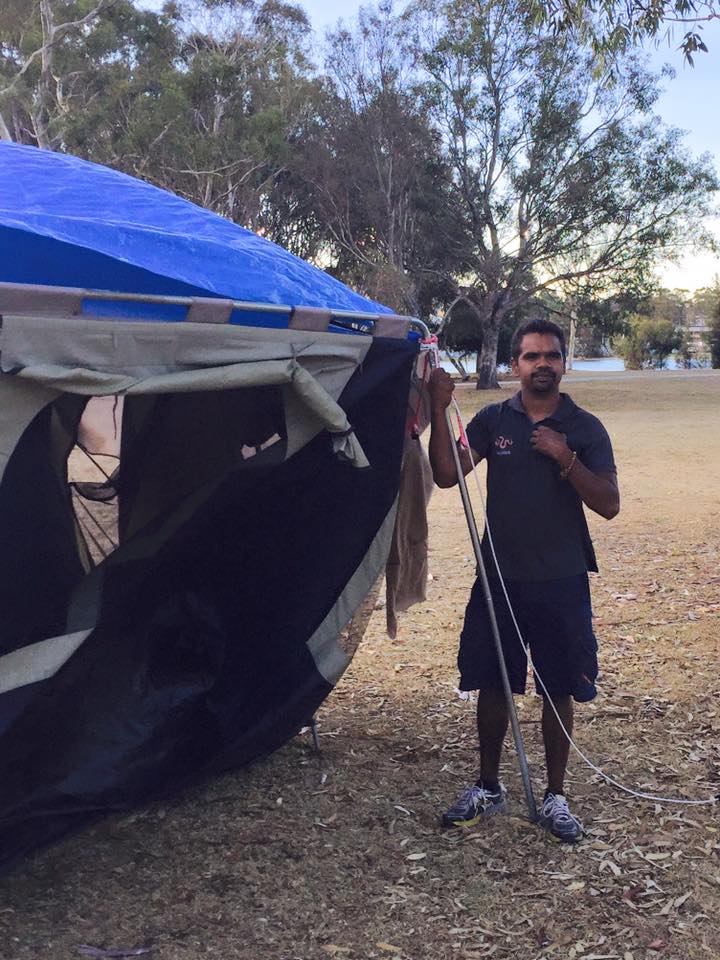
I’m doing this walk to give hope to my people, to show my people that you must never give up and you must continue to fight no matter what.
What would you like to clarify with the Prime Minister?
I would like to tell the Prime Minister to give full control to the Elders over the Communities and that they can live without government interference.
What would you like the Government to do right now?
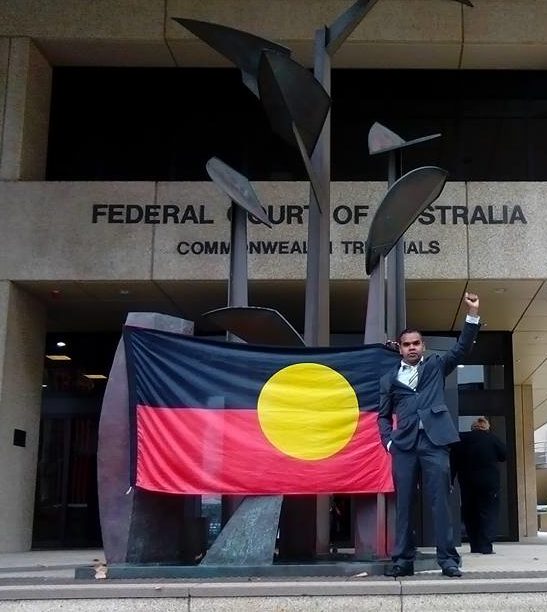
I would like it to give my people what they want, that is a Treaty (editor’s note: promised by former Prime Minister Bob Hawke in 1988; a promise that was not kept… ) and let us live our lives as we always have.
Tell us more about your walk?
This walk is made for peoples with a different cultural past, that they can move forward together and show that it brings hope to our country. We must work together.
Will you follow the songlines or the roads?
Yes, I follow them just as well as I follow the roads.
Do the roads follow the songlines?
Some do, others don’t.
What do you think you will learn from the communities you pass through?
I want to know the truth about my people who live and understand a different Law and the history of the Dreamtime (editor’s note: another term used for the Dreaming).
What is the main reason that made you want to walk?
It’s because every thought needs to be accomplished by actions and walking across the country, for my people, from home to go speak to the prime minister will create something huge that has never been done before.
What do you hope to meet on your way?
I don’t know but I know one thing for sure, people are starting to hear about me, traveling across the country and I will meet lots of people.
Who supports you on this journey to Perth?
I have a good family, friends and my people are behind me all the way and I have good friends who are helping me with the walk.
Do you have the blessing of the local Elders?
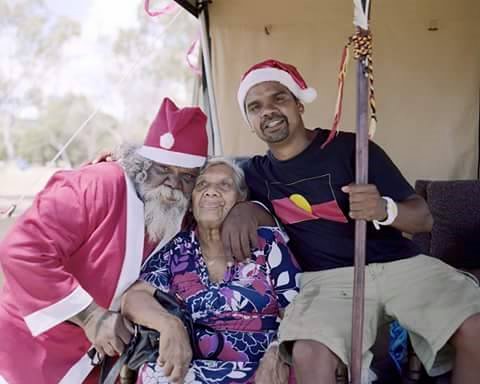
Yes and my Elder told me to follow the path in which you believe.
Have the local Elders given you specific messages to take to Canberra?
They said I would know what to say after I’ve walked with the community and across the country.
What else would you like people to know about this walk?
The government is going to close the community and I need your help to make a non-violent and active protest against the government. As a young Indigenous man and also for my people, it is our duty to take care of the planet. In our community life, our Elders fought so hard to build this community. This community is very important to us. I don’t want to see the community close and see my people lose their home because a government decided not to provide the necessary funds for minimum services. It’s not fair and that’s why I did this walk to save my people from losing their home and their country.
Want to know more about Clinton?
Contact us on our Facebook page
