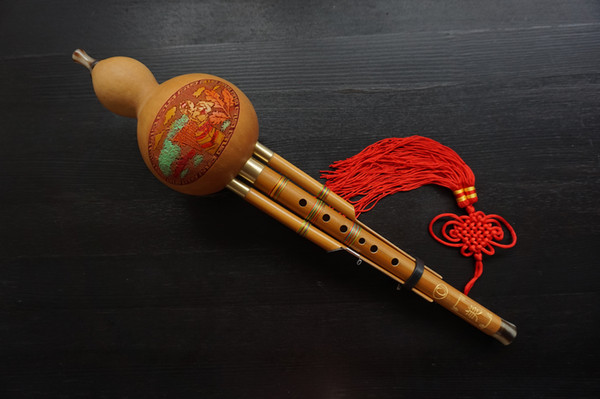
I just signed up. I’m here because I had the idea of blowing into a washing machine pipe. Being a hulusi player—a Chinese musical instrument (equivalent to a clarinet for a European)—I transposed circular breathing onto my washing machine pipe while developing the famous drone with vibrating lips.
After getting some results, I got curious and checked out tutorial videos. I found some of the same flute playing techniques. And that’s when I understood the full richness of didgeridoo playing and the beauty of the instrument. So I’m hoping that through contact with this community, I can progress in practicing this instrument.
For now I’ve invested in a modest 42 mm PVC pipe to which I added a 30 mm reducer for the mouthpiece.
To my great surprise it works! And offers quite a few playing possibilities. Now I’ve got one thing on my mind—trying it out on a real wooden didgeridoo.
That’s all, thanks to Gauthier for sharing his passion and advice.
I watched a video of someone playing the Hulusi because I didn’t know it, the sound is really beautiful. Listening to this instrument, I get the impression of hearing a drone sound, like the Didgeridoo, plus the fingering of a clarinet of course, and that they were making jaw movements to do circular breathing, right?
You’re right, the hulusi has a main tube for playing the melody and two drones on each side that you can activate or not. And some pieces are played entirely in circular breathing with one or two drones activated, see the piece « 古歌 » by gen daquan.
Thanks for your message and have a good afternoon.
Nice hulusi, didn’t know about it… I really like it and it goes really well with the flute..
I also started with a PVC slide didgeridoo and it does the job at the beginning to get the basics down…
I haven’t had the chance yet to blow into a wooden didgeridoo, eucalyptus or whatever…
The hulusi is an instrument that’s easy to get into for learning music, but it can also take you very far technically in terms of playing technique.
You can find them at very affordable prices.
Thanks for your message and best of luck continuing with your practice.
Hey @Cédric and welcome to the forum.
That’s a really cool instrument you’ve got . I knew about it but didn’t know what it was called, so thanks for that .
How long have you been playing it?
That washing machine pipe thing is genius, who would’ve thought of that, nice one .
Welcome to the crew anyway !!!
If you’d like to tell us more about yourself: you can do that here :
And if you want to share some photos that can go here :
During my first year my didgeridoo was a 40 mm PVC tube with a 30 mm reducer… and I swore by it (painted and decorated !!! And I tested different mouthpieces and connectors to change the key or with 90° angles to be able to « send » the sound directly to myself…
Anyway, here’s a link (not in French) for making a PVC didgeridoo…I just followed the measurements from an image he shows at the start of the video and I got a D that sounds surprisingly good…I found everything at the hardware store
Thanks for that really instructive video, does having two tubes of different diameters enrich the sound?
Anyway it sounds great. As for the hulusi I’ve been playing it for about ten years now, I took some lessons in China learning Chinese notation « jianpu ». You could say it helps a lot when getting into the didgeridoo.
I also play the xiao and a bit of dizi traditional Chinese bamboo flutes.
The sound of the didgeridoo is simply incredible and mesmerizing, it’s really nice to play, even with a beginner level like mine you can get a lot of enjoyment out of it and be creative.
Thanks for your message.
If you’re already having a lot of fun playing with your PVC, when you get a « real » wooden didgeridoo @Cédric you’re gonna lose your mind!
When the time comes for you, don’t hesitate to ask for advice on the forum about your first purchase, because you really shouldn’t just grab anything, and on the internet there’s the best but also the worst and some sellers won’t think twice about lying about where their stuff comes from and its quality. You gotta buy from good professionals.
You’re right, I’ve really come to understand that it’s important to invest in a quality instrument. I’ve seen quite a few didgeridoo makers on didgeridoo passion, with some really beautiful instruments. I’ve also seen Didjaman’s beautiful didgeridoos, and honestly I’m not quite sure which way to go. Ideally I’d like to test before buying, but that’s not always easy. I really want to find an instrument that suits me, though maybe I haven’t yet gained enough experience to choose properly. I should probably take time to think it through. In the meantime, I’d really like to meet other didgeridoo players to get more into the subject and share experiences.
Maybe there are events or meetups in Île-de-France?
I should take some lessons or do a workshop to learn the basics.
Thanks for your help.
Otherwise it’s clear that going to Le Rêve de l’Aborigène, L’Arbre qui marche or Nomadidge (and maybe even Tribal Elec ?) will get you to meet players and let you try loooads of didges !!! A workshop too (I used to try everyone’s didges !!!)
If you’re up for a bit of a drive …go see Philipoe in Pornic…he’s starting to have quite a family of pipes
The only didge I’d buy (and that I bought a second time remotely) is the woodslide… but it’s pricey !!!
Kissesssss
         as for me, I've been playing didgeridoo for five years. I started with a conical PVC, and at the beginning a didgeridoo should be easy to play — the conical works really well for that because it gives you the drone very easily.

       once you've got the basics down by playing regularly, you'll notice your playing power increases, and that's when you can move on to a cylindrical.

      as a beginner I didn't know any of this and only swore by conicals, but now I'm really enjoying discovering what a cylindrical didgeridoo has to offer.

      if you're handy you can try making a didgeridoo yourself — I do it using the sandwich method.
Thanks for all these great tips, I reckon it’s the right move to meet up with other players and discover things. I’m taking note of the possible contacts you gave me.
Thanks.
I had no idea about those specifics at all. In fact, I had the opposite impression—that no matter what, the conical shape from a termite-hollowed log would always be much better than a simple cylinder. Could you tell me more about the sandwich method? Do you have any photos of your didgeridoos?


 . I knew about it but didn’t know what it was called, so thanks for that
  !!!
!!!

 ) for making a PVC didgeridoo…I just followed the measurements from an image he shows at the start of the video and I got a D that sounds surprisingly good…I found everything at the hardware store